

This is a one-person side project built on evenings and weekends. It's not a startup, it's not a team — it's just me, genuinely obsessed with making mixed-signal electronics more accessible. Every kit is designed, documented and tested by me personally.
01 — The Problem
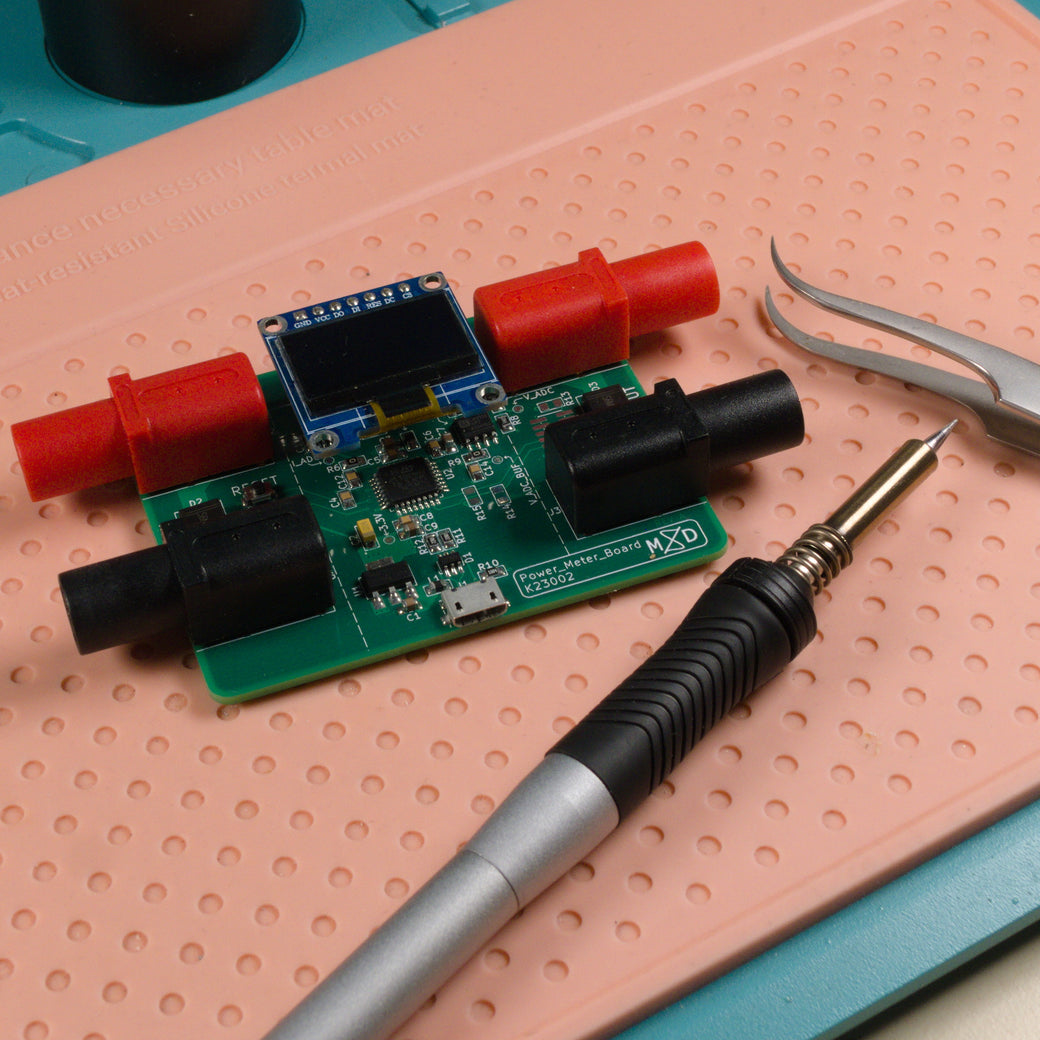
A bag of parts isn't an education.
Most electronics kits ship with a bill of materials and a pinout diagram. If something goes wrong, you're on your own. If you want to understand the circuit, you're searching forums at midnight. That's the problem MSD was built to solve.
02 — The Documentation
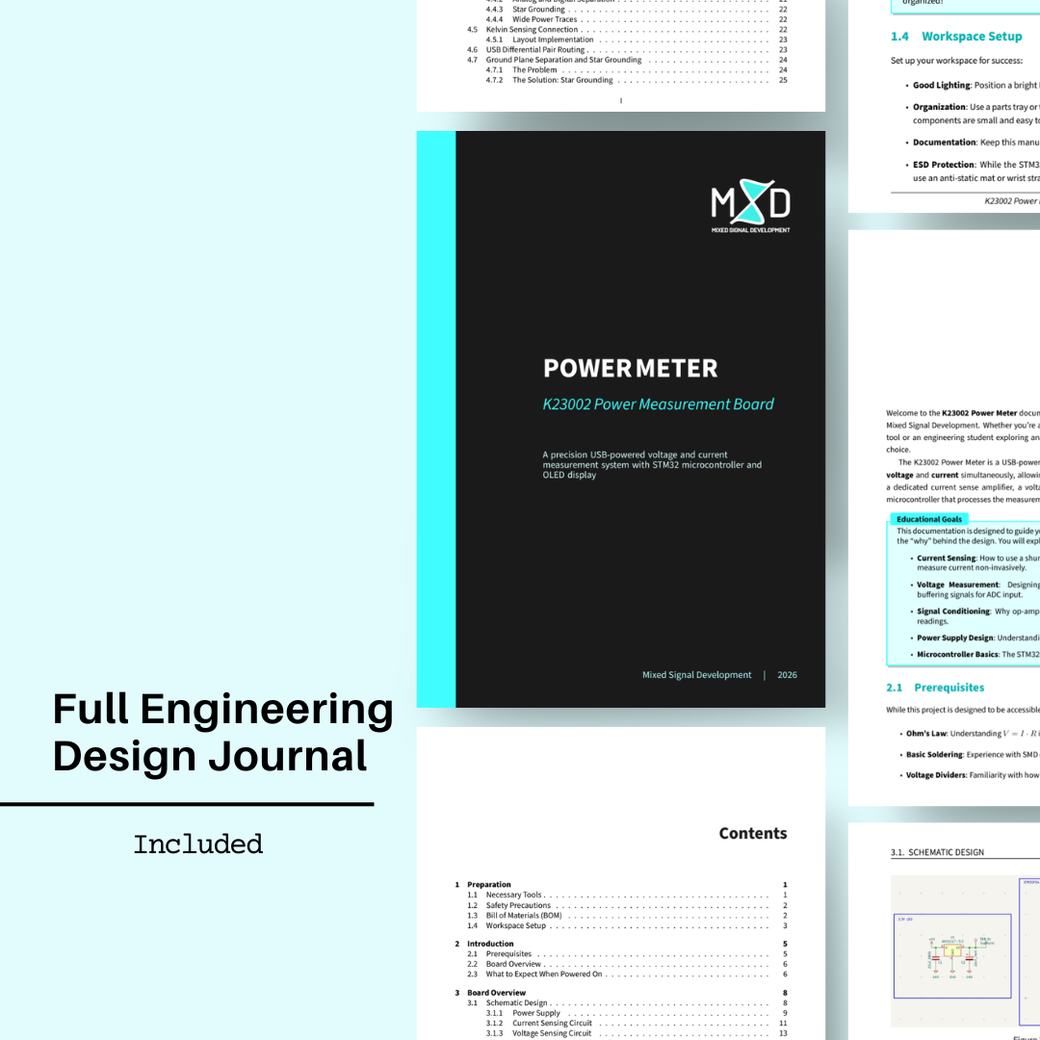
Every component has a reason.
Each MSD kit ships with a full engineering design guide — schematics with annotations, component selection rationale, and signal flow walkthroughs. Not a pinout. An actual design document, written by the engineer who designed the circuit.
03 — The Depth
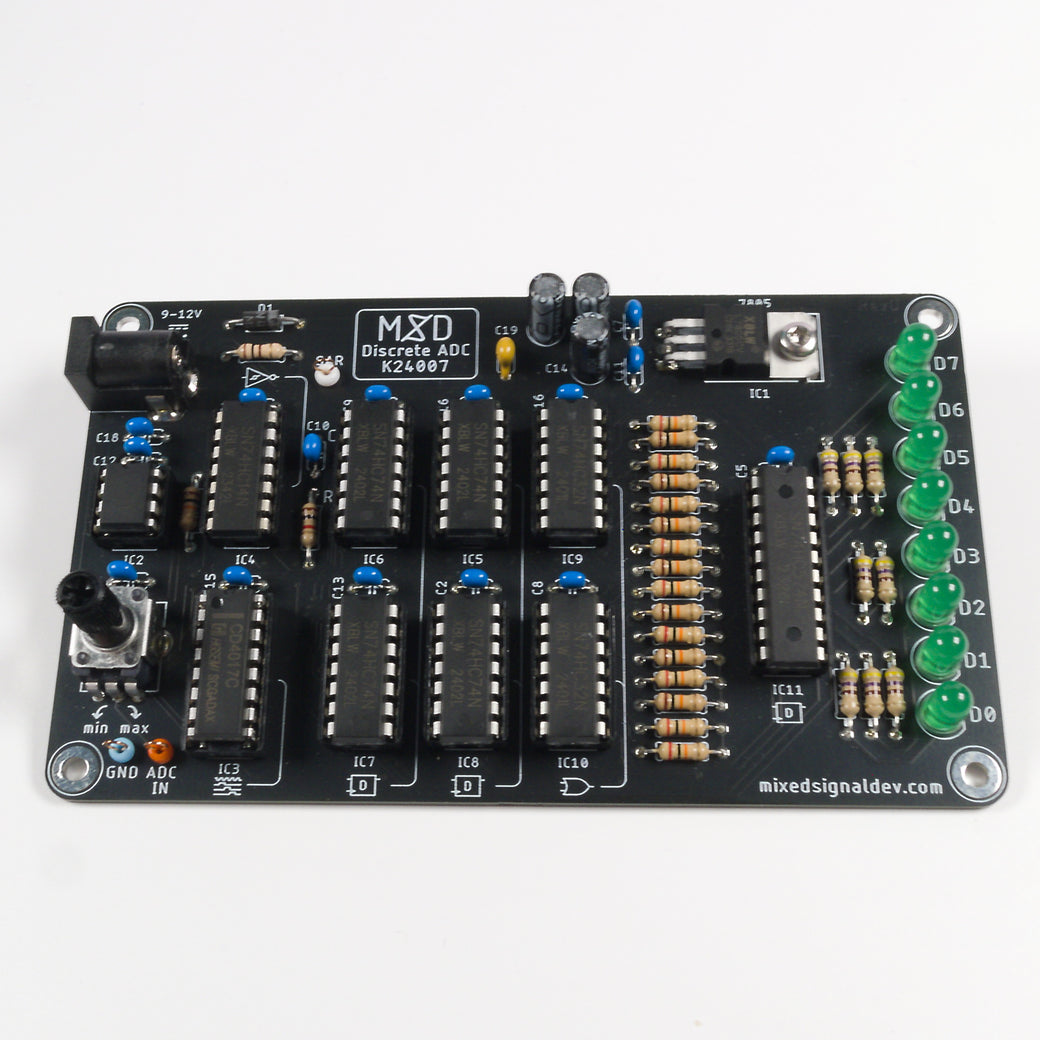
Circuits that actually teach.
Op-amp stages, ADCs, I²C buses — our kits live in the interesting territory where most learning materials stop short. No Arduino wrappers. No simplified abstractions. The real thing, documented properly.
Our Kits
-
BCD Counter PCB Kit
BeginnerRegular price CHF 29.90Regular priceUnit price per -
Discrete ADC DIY Kit
BeginnerRegular price CHF 44.90Regular priceUnit price per -
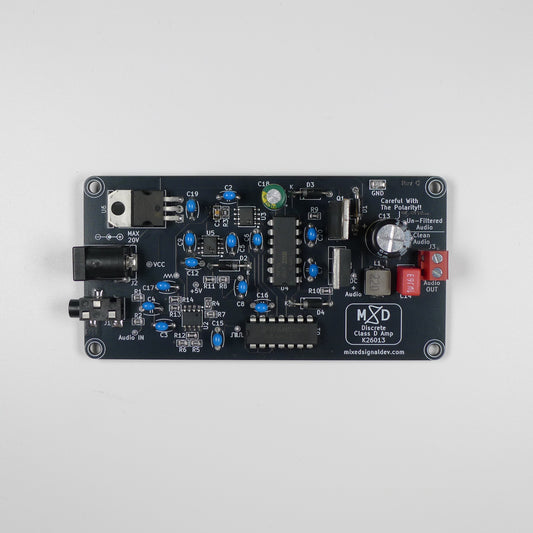
Discrete Class D Amplifier DIY Kit
IntermediateRegular price CHF 44.90Regular priceUnit price per -
I2C Bus Playground DIY Kit
IntermediateRegular price CHF 49.90Regular priceUnit price per




Browse by level
 Beginner
Start here
Through-hole soldering · Circuit basics · No prior experience needed
Soldering Practice · BCD Counter · OpAmp Template · Discrete ADC
Browse kits → Intermediate
Level up
SMD soldering · I²C protocol · Mixed-signal circuits
I2C Bus Playground · Discrete Class D Amplifier
Browse kits → Advanced
Go deep
STM32 firmware · Op-amp design · Discrete ADC circuits
SMD Challenge · Power Meter
Browse kits →