


Precision Starter Bundle
Precision Starter Bundle
Every MSD kit teaches you how a circuit actually works. You get the board, every component, and an engineering design guide written by the person who designed it.
Skills you'll build
Couldn't load pickup availability



Skills you'll build
What's included
- SMD Challenge Kit — challenge PCB + all surface-mount components (down to 0201)
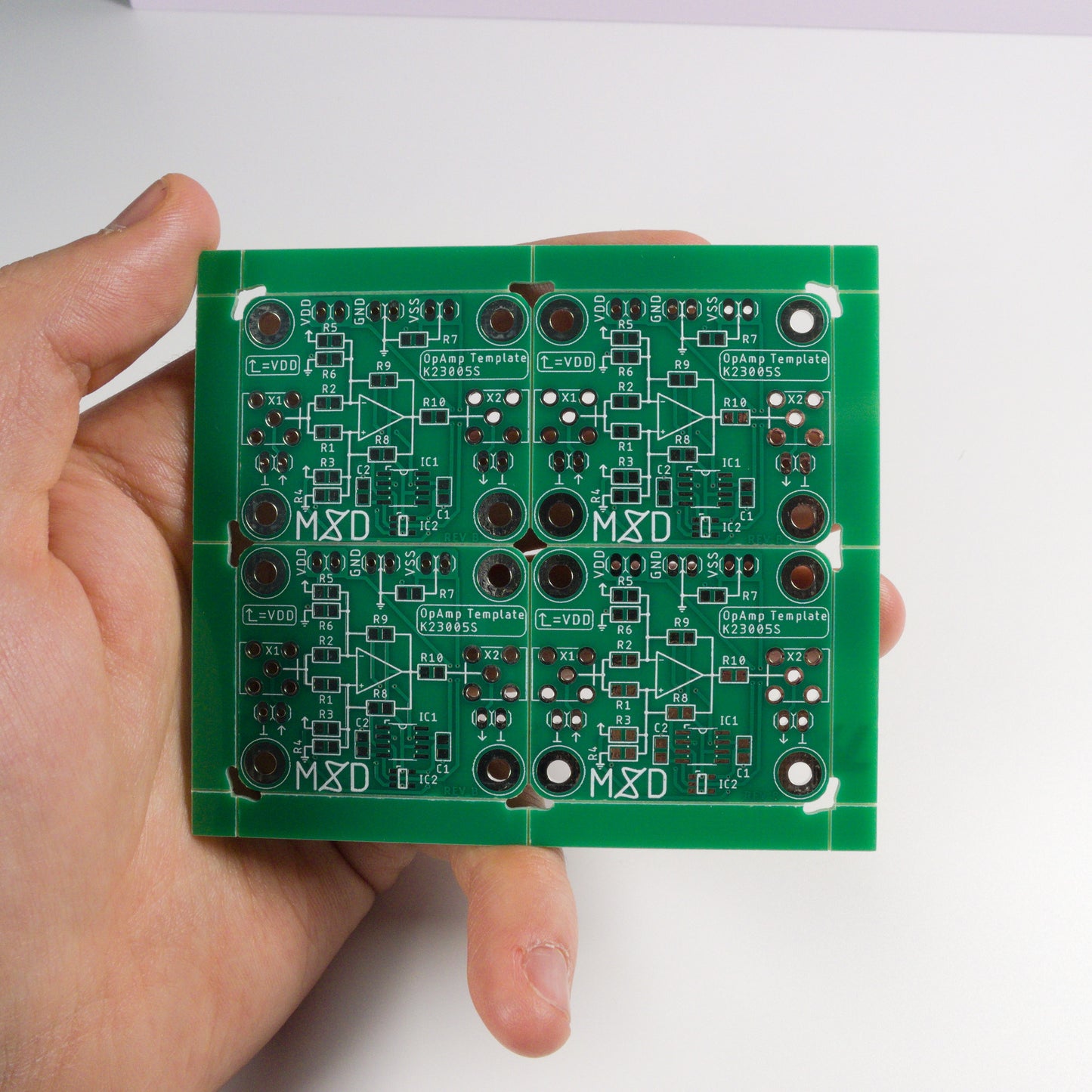
- OpAmp Template Educational Kit — PCB + LM358s, LM321s op-amps + all components + simulation models
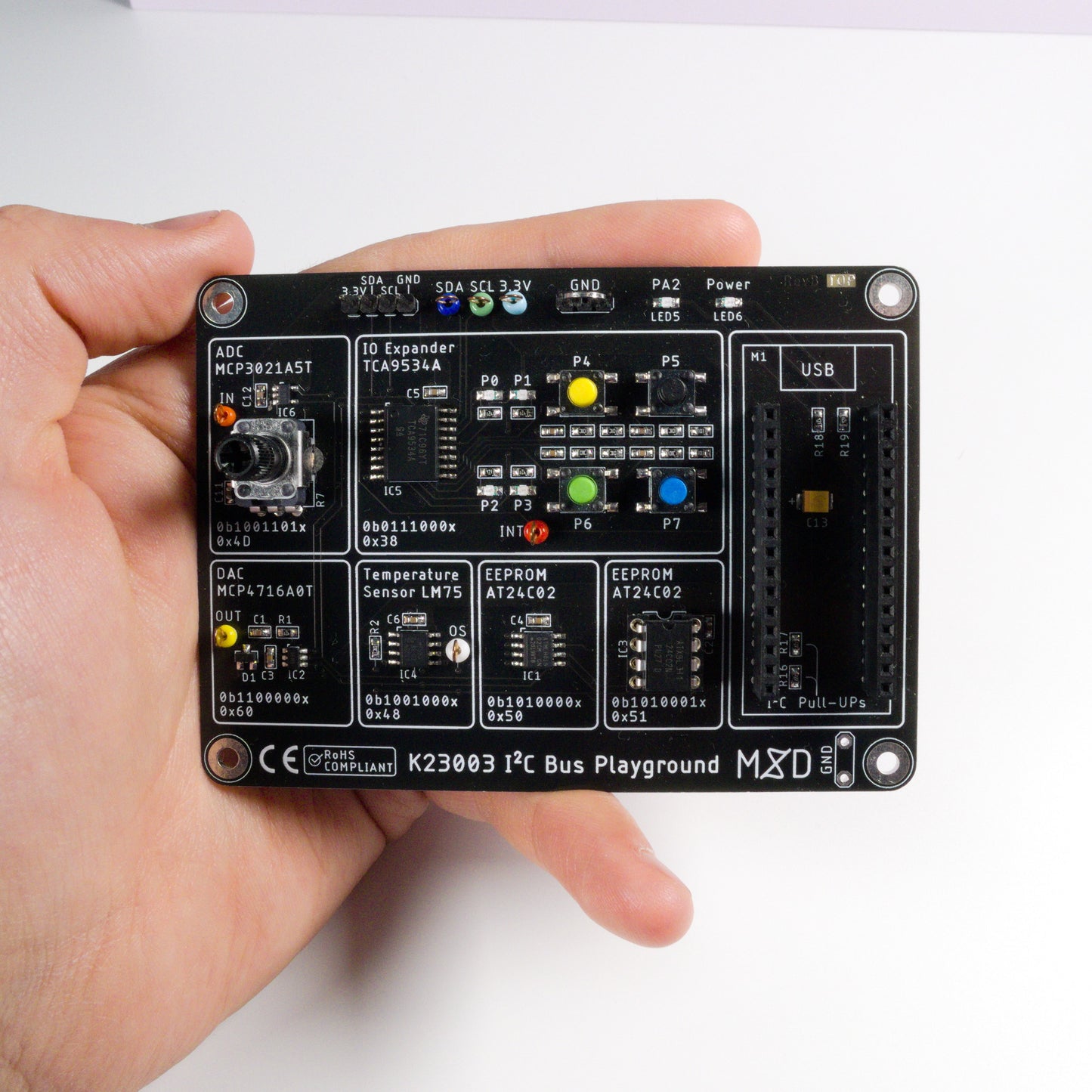
- I2C Bus Playground DIY Kit — PCB + 6 I²C peripherals + all components
- Documentation, simulations and circuit guides for all three kits
About this kit
You can already solder. These three kits cover the gaps that come up constantly once you start building real things: SMD components, analog circuits, and I²C communication.
Not the most glamorous topics. But the ones that will actually expand what you can build.
What's in the box
- SMD Challenge Kit — A surface-mount soldering challenge board with components down to 0402. It will tell you honestly where your technique is at. Fast to build, harder than it looks, useful to have done.
- OpAmp Template Educational Kit — An analog circuit sandbox built around the LM358 and LM321. Amplifier, comparator, filter, oscillator — each configuration documented and explained. The kit that makes you stop avoiding analog.
- I2C Bus Playground DIY Kit — Six I²C devices on one bus. Teaches the details you only learn when you have a sensor that won't respond and need to know why: addressing, pull-up selection, clock stretching, bus contention.
Why this order
The SMD Challenge first — calibrate your precision, find out what you need to work on. Then the OpAmp Template — analog design rewards patience, and it's easier to focus on the circuit when you're not fighting your soldering at the same time. The I²C Playground last — by then you'll have the hand skills and the circuit intuition to actually engage with the protocol rather than just copy-paste example code.
Is this right for you?
If you've built a few through-hole kits and want to move into SMD, analog, and embedded communication — yes, this is the next step. If you're a complete beginner, start with the Fundamental Skills Bundle first and come back to this one.
What you'll learn
- How to solder SMD components down to 0402 — and where your technique actually needs work
- How op-amps work as amplifiers, comparators, filters, and oscillators — enough to design with them, not just copy schematics
- What actually happens on an I²C bus — addressing, pull-ups, clock stretching, the stuff that matters when a device stops responding
- How to debug a multi-device I²C bus without guessing
- When to reach for an op-amp instead of a microcontroller — and why it matters
Prerequisites & difficulty
Technical specifications
FAQ
Do all three kits come in one order?
Yes. One box, everything included.
Do I need special tools for SMD?
A fine-tip iron, solder wick, and flux. A magnifier helps but isn't required. You probably have most of this already.
I've only done through-hole soldering — is SMD really achievable here?
Yes. The SMD Challenge is specifically designed as a first step into SMD. It's harder than through-hole, but that's the point.
Can I buy these individually?
Yes — all three are in the store as standalone kits.
Before you buy
Not sure what arrives in the box?
Every kit ships with the PCB, every component, the assembly guide and the full engineering design guide. See exactly what you get before you order.
Premium Engineering Files
Gerbers, firmware and simulation files come with every kit. After you order, enter your order email here to download them.